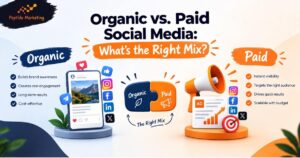
It used to be straightforward to choose any platform. Post on Facebook. Maybe try Instagram. Not anymore!
There are 5.66 billion social media users worldwide right now. The average person uses almost seven different platforms every month. That’s a lot of noise. You can’t be everywhere. You shouldn’t try. You need to know where your customers actually are. And where your ad budget will actually work.
This guide breaks it down. We’ll compare Facebook, Instagram, and TikTok for business. We’ll cover the best platforms for B2B. And we’ll look at something most guides skip: how platform rules hit regulated industries like peptides especially hard.
Why Platform Choice Matters More Than Ever
Ask marketers what their biggest challenge is. Many will say the same thing: figuring out which platform to invest in. That checks out. Every platform runs on a different algorithm. A different audience. A different set of ad rules.
Pick wrong, and you burn months of content on people who were never going to buy.
Here’s the good news! You don’t need all of the apps. There are a lot of overlaps among most platforms. Two or three well done is better than 8 poorly done!
Facebook vs Instagram vs TikTok for Business
This is the comparison everyone searches for. So let’s get into it.
Facebook remains the largest site on the face of the earth! More than 3 billion users a month. It’s also the first place where customers find new brands: nearly 1 in 4 shoppers use it to discover new brands. Facebook is still a good value if your audience is 30+.
Instagram has outpaced in ROI. It is the most trusted platform among marketers at the moment. It’s also where younger buyers look at a brand prior to even filling out a form. The majority of B2B decision-makers today are Millennials or Gen Z, and all of these content formats are a good fit for them.
TikTok
The competition only continues to grow tighter on TikTok. Its engagement rate increased by almost 50% from the previous year. Facebook was holding steady during the same time period. In 2026, TikTok ad revenue will reach nearly $44 billion. For audiences under 35, and if you can take that extra video step, no platform can get the attention you can right now like TikTok.
| Platform | Best For | 2026 Standout Stat |
| Broad reach, product discovery, service | 3.07 billion monthly users | |
| Storytelling, younger buyers, ROI | Most-cited platform for ROI | |
| TikTok | Fast growth, video-first attention | Engagement up ~48% YoY |
Most small businesses do best running Facebook and Instagram together. Add TikTok once you have the bandwidth for video.
Best Platforms for B2B Social Media Marketing
Selling to other businesses? The math changes.
- LinkedIn wins, and it’s not close. Around 85–87% of B2B marketers use it. It converts visitors to leads at nearly 3.5x the rate of Facebook. Four out of five members influence business decisions at their company.
- One stat worth remembering: posts from individual employees get about 8x the engagement of company page posts. Translation, get your team posting personally. Not just your brand account.
- YouTube comes in second. It’s strong for demos, tutorials, and long-form content that shows up in search.
- Instagram rounds out the top three. It humanizes a B2B brand and shows company culture to younger buyers now sitting in procurement roles.
What This Means for Peptide and Health Brands
Peptides are in a tight market online. The FDA does not approve many peptides. As with drugs, platforms such as Meta consider them the same, and they can cause addiction. Just like drugs, platforms like Meta consider them the same, and they can be addictive. This means that the paid ads are swiftly rejected. Even slight health references can have an account flagged.
Meanwhile, TikTok has filled up with influencer peptide content. A lot of it comes from affiliates earning commission per sale. Disclosure is thin. Safety oversight is thinner. Regulators and state medical boards have taken notice.
So what does this mean in practice?
Paid social alone is a shaky foundation for a peptide business. Organic content can work, but it has to stay educational, not promotional, or it risks getting flagged too.
This is exactly why SEO and AEO content have become the most reliable growth channels for peptide brands in 2026. Blog posts. Structured data. FAQ pages built to show up in search and AI overviews. Search doesn’t ban you for selling a legal product. It just ranks you on content quality.
How to Choose the Right Platform for Your Business
- Know your audience’s age. Under 35 → TikTok and Instagram. Over 35 or B2B → Facebook, LinkedIn, and YouTube.
- Match the platform to your goal. Awareness → Facebook and Instagram. Leads → LinkedIn. Fast discovery → TikTok and YouTube.
- Check your industry’s rules. Regulated products, peptides included, face real ad restrictions. Confirm what’s allowed before building an ad strategy.
- Start with two platforms. Not six. Do them well. Measure for 60–90 days. Then expand.
- Track real numbers. Cost per lead. Conversion rate. Traffic quality. Not just followers.
Emerging Platforms Worth Watching in 2026
A few names deserve a spot on your radar this year.
LinkedIn is entering what insiders call its “creative era” more video, younger users joining fast. Substack has grown past newsletters into a full social platform with feeds and profiles. Reddit just crossed 500 million monthly users and is expanding well beyond the U.S.
None of these needs a full strategy yet. But a small test presence now can pay off before your competitors catch on.
Final Words
The selection of the right platform is just half the work. A peptide-regulated space is such that a single wrong ad claim can close down your account.
That’s where Peptide Marketing comes in. Their team builds compliant, high-performing growth strategies made specifically for peptide and health brands; SEO, content, and platform-safe social, all in one place. If you’re ready to grow smarter in 2026, they’re worth a conversation.
What social media platforms should my business use in 2026?
To focus on two or three that are appropriate for your audience. Facebook and Instagram encompass a wide consumer base. LinkedIn covers B2B. TikTok targets a younger, video-based demographic.
What's the best social media platform for small business growth in 2026?
Instagram and Facebook are the best overall options: reduced ad costs, powerful local targeting, built-in shopping features. If you can create consistent video content that can be transported to TikTok, it is the fastest-growing choice.
How do I choose social media platforms for my marketing strategy?
Begin with the age and tastes of your audience. Match that with your primary goal. Check any industry ad restrictions. Test 1 or 2 platforms first, then expand.
What are the emerging social media platforms for business marketing in 026?
The video push by LinkedIn, the social feed by Substack, Reddit, and Bluesky. They're all worth testing early this year.