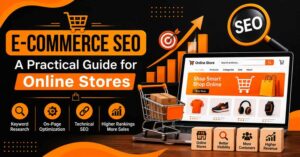
Have you noticed the traffic stops as soon as you stop advertising? Organic search is performed differently. An optimized e-commerce store can keep getting traffic from search engines without having to pay per click. According to BrightEdge research, for most ecommerce sites, organic search makes up 51% to 53% of total traffic.
For peptide brands in competitive ecommerce sectors, ecommerce SEO is a long-term strategy to enhance visibility and attract customers actively searching for relevant products. This ecommerce SEO guide covers all the essentials that online stores need to know, from keyword research to optimizing products, technical aspects, and content structure.
What Is E-commerce SEO?
SEO for e-commerce websites involves optimizing product pages, category pages, and technical elements of an online store to improve organic rankings and attract targeted search traffic. Effective e-commerce website optimization focuses on improving technical performance, product visibility, user experience, and content quality.
This applies to optimizing product pages, research-oriented categories, educational content, and technical aspects that promote understanding of the website by users and search engines for peptide brands.
E-commerce SEO vs Traditional SEO
Product pages Service pages
Category optimization Location/service optimization
Product schema Organization schema
Shopping intent Information intent
What Are the Most Important Ecommerce SEO Factors?
The top ecommerce SEO tactics include optimizing your website for users, linking to relevant pages, adding structured data, creating relevant content, and technical optimization.
| Factor | Why It Matters | Quick Win |
| Product page optimization | Drives product visibility and conversions | Create unique titles, descriptions, and images. |
| Category page SEO | Captures broader search demand | Add useful category descriptions. |
| Site speed | Improves rankings and user experience | Compress images and improve hosting. |
| Product schema markup | Helps search engines understand products | Add JSON-LD structured data. |
| Internal linking | Connects important pages | Link guides, categories, and products. |
| Mobile experience | Most users browse on phones | Test mobile shopping journeys. |
Structured data is especially important because it helps search engines understand product information such as pricing, availability, and reviews. Google Search Central documentation on structured data notes that pages showing up as rich results earn significantly more clicks, with case studies pointing to gains as high as 82%.
How Do You Do Keyword Research for E-commerce?
Effective e-commerce keyword research is about search intent, not the search volume. If a keyword has less traffic but more intent to buy, it can be more successful than a keyword with a lot of traffic but not a lot of buying intent.
There are three types of ecommerce keywords:
- Transactional keywords: Words such as “buy,” “order,” or “shop” that cater to shoppers who are ready to buy.
- Comparison keywords: These are keywords entered by users who are comparing options such as “best, top” or “vs.
- Informational keywords: Searches from users looking for education before making a decision.
Another advantage of long-tail keywords is that they tend to have a higher intent. For instance, if someone types a search query that is related to a specific product, this means that they know exactly what they are looking for.
For peptide brands, keyword research should include product names, compound-related searches, educational topics, and research-focused queries.
How Do I Rank Product Pages on Google?
Product pages are some of the most critical pages for e-commerce SEO, as they directly impact sales and conversions.
Each product page should include:
- A unique title tag that contains the main keyword.
- An informative meta description
- Original product content instead of manufacturer copy
- Fast loading speed and mobile-friendly design
- Product schema markup for details like availability and reviews
Product pages for peptide e-commerce stores should also have clear and accurate information that enables visitors to grasp the product details, specifications, and any product research information.
How Can I Optimize Product Descriptions for SEO?
One of the most prevalent e-commerce SEO issues is duplicate manufacturer descriptions. If more than one store uses the same content, the search engines will not have much reason to rank one page better than the other.
- Answer common customer questions
- Include relevant keywords naturally
- Explain product details clearly
- Optimize it for mobile readers
Templates can be helpful to keep the styles consistent while still incorporating different information for each product in larger catalogs.
What About Category Page SEO?
Category pages can also drive a lot of valuable traffic, but are often not well optimized. Search engines do not have enough context when it comes to a product grid. A good category page will describe the category, who it benefits, and how products are sorted into the category.
With large catalogs, category pages can be used to target searches for various peptide categories, compounds, and education topics, making them easier to navigate for peptide ecommerce stores.
Why Does Structured Data Matter for E-commerce?
Organized data allows search engines to understand better the information found on e-commerce pages. It offers information regarding products such as their prices, availability, ratings, and more. More so, as AI-powered search keeps on increasing, structured data is more valuable than ever to help search systems better understand website data and deliver precise results.
What is the importance of Internal Linking for an Online Store?
Internal linking aids search engines in finding key pages and enhances the customer experience.
Ecommerce stores should connect:
- Educational guides to relevant products
- Product pages to related items
- Category pages to subcategories
Creating stronger topical connections and making it easier for users to find relevant information by linking educational articles, research content, and product categories together is optimal for brands selling peptides.
To get detailed information, read our blog The 2026 Peptide Marketing Blueprint to Help Your Brand Scale Faster.
Ready to Scale Your Ecommerce Store?
In specific markets where trust building, education, and technical precision play significant roles, the optimization process of SEO for e-commerce is an ongoing journey.
At Peptide Marketing, peptide brands can leverage our professional SEO services for e-commerce websites to enhance their search engine presence, optimize their product catalogs, bolster technical SEO, and cultivate long-term organic traffic to foster growth.
FAQs
What is e-commerce SEO?
E-commerce SEO involves optimizing web content, structure, and pages to boost their position and drive traffic to the online store looking for products.
How do I rank product pages on Google?
Focus on the unique content of the product, technical optimization, mobile optimization, fast loading speed, and product schema markup.
What are the most important ecommerce SEO factors?
Some of the main elements include product page optimization, category SEO, site speed, structured data, internal linking, and mobile experience.
How do I do keyword research for e-commerce?
Analyze long-tail search queries and customer intent, and use keywords such as transactional, comparison, and informational.
How can I optimize product descriptions for SEO?
Develop unique descriptions to address customer queries, incorporate relevant keywords naturally, and add product information which is helpful.