UK peptide brands face a tricky market. Demand is high, and plenty of sellers promise faster recovery, younger skin, and easy weight loss. But the MHRA is now checking whether UK clinics break the law with those very claims. You can still grow here. You need to start with the rules, not the ad copy.
Why the UK needs its own playbook
The UK isn’t the US with different spelling. US brands worry about FDA enforcement and compounding, we cover that in our FDA BPC-157 compounding review. UK brands answer to the MHRA and the Advertising Standards Authority (ASA), and the tests and penalties are different.
The ASA’s reach is wider than most brands expect. It can act on paid ads aimed at UK shoppers, on unpaid marketing from UK-registered firms, and on ads on a .uk domain, wherever the advertiser is based. Prices in pounds or UK-only delivery can be enough to pull an overseas brand into scope.
What the MHRA looks at
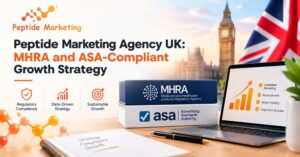
The MHRA decides whether a product counts as a medicine. Your claims trigger that decision. A spokesperson said clinics that make medicinal claims for peptide injections face medicine rules under the Human Medicines Regulations 2012. The agency says it will act against breaches. In April 2026, reports showed it was investigating UK peptide clinics.
Here is what that means in practice. “Helps tendons heal,” “burns fat” and “reverses ageing” are medicinal claims. So is naming a prescription drug in your marketing.
In June 2026, the MHRA, the ASA and the pharmacy regulator issued a joint warning about newly licensed weight-loss drugs. Naming them, or using phrases like “oral GLP-1s,” will likely break the CAP Code. The warning covers waiting lists too.
A “research use only” label does not protect you by itself. If your marketing points to human use, you present the product as a medicine.
What the ASA adds
The ASA enforces the CAP Code. The code says a medicine needs an MHRA licence before anyone markets it. It also bars ads for prescription-only medicines aimed at the public.
Other rules apply too. Ads must stay honest. You need evidence for objective claims before the ad runs. Testimonials must be real and typical of normal results, so one dramatic success story will not pass. Before-and-after images face the same test.
The growth strategy that works inside the rules
Compliant growth rests on four channels. None of them needs a benefit claim.
SEO first
Organic search rewards useful content. A good plan for SEO for peptide agency clients starts with education. Explain what peptides are. Explain how UK law treats them. Show readers how to spot a legitimate supplier. Our SEO services follow this approach.
eCommerce SEO
Good eCommerce SEO peptide product pages describe the product, not the outcome. List the specifications, purity documents, storage advice, and shipping terms. Add clean categories, fast load times, and schema markup. Leave out benefit language. Shoppers still find what they need, and you stay inside the rules.
Local visibility
Do you run a clinic or serve a UK area? Local search brings steady enquiries. Our guide to local SEO for UK peptide brands shows how to set it up.
Social media marketing for peptides
Social media marketing for peptides works best when it teaches. Post sourcing stories, regulation explainers, and behind-the-scenes clips. Skip outcome claims and prescription drug names. Label influencer posts as ads clearly. A hashtag buried at the end fails the ASA’s test.
How to choose a peptide therapy marketing agency
A peptide therapy marketing agency should answer four questions before you sign.
- Can the team explain the MHRA’s medicinal-claims test in plain words?
- Do they write product pages without benefit language?
- Do they know the CAP Code rules on testimonials and evidence?
- Do they run UK and US campaigns as separate plans?
Vague answers are a red flag. The team behind our peptide marketing agency UK service works to this standard at Peptide Marketing. Want a plan that holds up to MHRA and ASA scrutiny? Talk to us.
FAQs
What does a peptide marketing agency in the UK do?
It runs SEO, content, eCommerce and social for peptide brands. But the work clients rarely see is the claims check. Before anything goes live, every line is read against MHRA and ASA rules. That means fewer rewrites and fewer complaints down the line.
What does RUO (Research Use Only) mean in peptide marketing, and why does it matter for advertising?
RUO means the product is sold for lab research, not for people to use. The label only protects you if your marketing backs it up. Use an image or a claim that hints at human use, and the product can start to look like a medicine to the regulator.
What can and cannot peptide brands say in their marketing in the UK?
You can state product facts, explain the regulations and share evidence-based education. You can’t make medicinal claims, promote prescription-only medicines to the public or sell unlicensed products as treatments.
How does the ASA regulate advertising claims for peptide brands?
Through the CAP Code. Claims must be truthful and backed by evidence. The ASA investigates complaints and publishes its rulings, so a breach doesn’t stay private for long.
Can peptide brands run ads on Meta and Google in the UK?
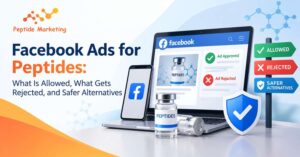
Often not, at least for medicinal-style peptide products. Platform rules are strict, and they change a lot, and UK ads still have to meet the CAP Code. For most brands, organic search and education do more than paid ads.
How do I choose a peptide marketing agency in the UK that understands compliance?
Ask for UK examples. See how the team handles claims and testimonials, and check that UK and US work are kept separate. Then ask what they’d do if the MHRA questioned one of your pages. Their answer will tell you most of what you need to know.