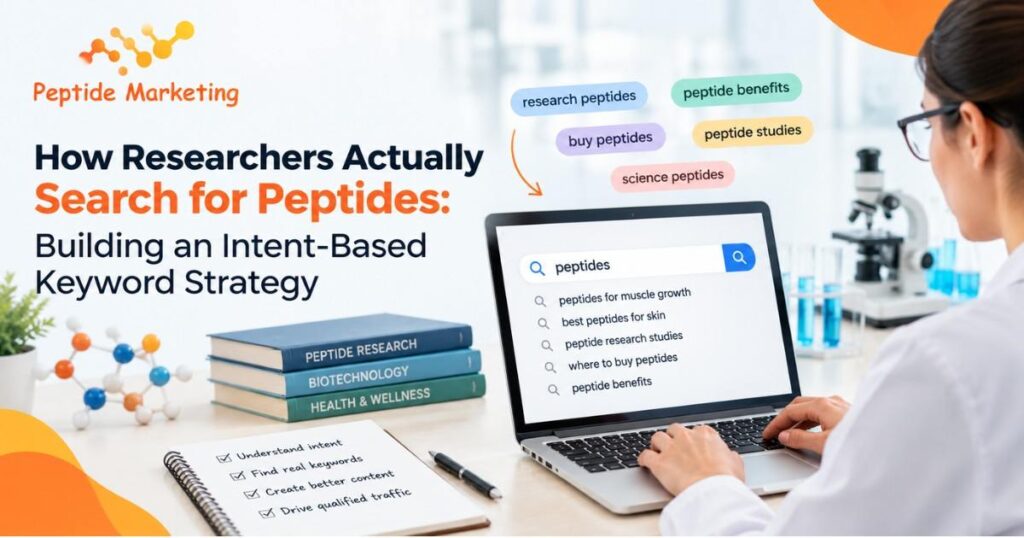
Most peptide keyword lists get built backwards. Someone pulls high-volume terms from a tool. They write a page for each one. Then they hope for traffic. That skips the real question: what does this person actually want when they type this term? Are they even close to buying? Here’s how researchers actually search, and how to build a strategy around that instead of around volume alone.
Why Peptide Keyword Research Looks Different
RUO Changes the Vocabulary
Most peptides sell under Research-Use-Only status. That one fact changes everything about how people search. Buyers sound like researchers, not shoppers. Nobody types “buy weight loss pills” here. They type compound names. Mechanism terms. Comparison queries that read more like a lab note than a shopping list.
Intent Beats Volume
A keyword with 5,000 searches and zero buying intent isn’t worth much. A keyword with 300 searches and clear research-stage intent often converts better. Intent, what the person actually wants, should decide which pages get built. Volume comes second.
A strong SEO strategy helps peptide brands target the right research queries, improve organic visibility, and attract visitors with genuine purchase intent. Learn why SEO services are important for peptide sellers.
How Researchers Actually Search
Scientific Names Win, Almost Every Time
Researchers search compound names first, not the brand selling them. Brand search only shows up once someone’s already decided who to buy from. That’s late in the journey. Early on, it’s all about the compound and how it’s studied.
What different search terms signal
| Search Term Example | Likely Intent | Best Page Type |
| “[compound] mechanism of action” | Early research | Educational article |
| “[compound A] vs [compound B]” | Comparing compounds | Comparison guide |
| “buy [compound] research peptide” | Ready to purchase | Product page |
| “[Brand name] [compound]” | Already picked a supplier | Product page |
| “research peptide supplier reviews” | Checking legitimacy | Trust content |
Compound-Specific Keywords vs. Category Terms
This comes up a lot. Should a brand chase a specific compound name, or go broad with “research peptides”?
Both, honestly. They just do different jobs. Compound-specific terms bring in people who already know what they’re looking for. Higher intent, faster conversion. Category terms bring in earlier-stage visitors still exploring. Slower to convert, but good for building authority.
Compound-specific vs. category terms
| Factor | Compound-Specific | Category Term |
| Search Volume | Lower per term | Higher per term |
| Buyer Stage | Mid to late | Usually early |
| Competition | Lower, specific | Higher, generic |
| Best Use | Product/comparison pages | Educational hub content |
Use category terms to build authority. Use compound-specific terms to catch people who are ready to act.
Matching Search Intent to Page Type
Every keyword falls into one of three buckets.
- Informational
- Comparison
- Transactional
Build the wrong page for a keyword’s real intent, and it won’t rank. A blog post can’t win a query that wants a product page. A product page can’t win a query that wants an explanation.
Can You Target High-Volume Commercial Keywords Safely?
Yes, with a catch. Organic search and paid ads run under different rules. Google’s ad policy restricts peptide ad copy hard. Organic content has more room, as long as it stays inside RUO framing and skips outcome claims. Ranking for a commercial term isn’t the same as promising a result in an ad. Keep the content descriptive. Not prescriptive.
Understanding the difference between organic search and paid campaigns helps peptide brands decide where to invest their marketing budget first. Explore SEO vs PPC for peptide brands.
Building a Compliant Keyword Strategy
Every keyword should pass two checks. Does the page describe the compound honestly? Does it avoid implying a health outcome? Dosage instructions, cure language, before-and-after framing, none of that belongs in ranking content. It doesn’t belong in the ad copy either. Keyword strategy and compliance strategy aren’t two separate things. They’re the same thing.
How Often Should This Get Updated?
Peptide regulation moves fast. A keyword strategy from a year ago is already stale. Check quarterly. Which compounds are under new scrutiny? Which terms are shifting in volume? Which pages need updated framing? When a compound’s status changes, the content around it needs to change too.
Conclusion
Getting intent right is what turns a keyword list into an actual strategy. If you want help building one as a compliance-first peptide marketing agency, that’s what our SEO services for peptide brands are built to do.
FAQs
What’s different about keyword research for peptide brands vs. other niches?
Buyers search like researchers, not shoppers. Compound names and mechanisms dominate over typical shopping languages.
Do researchers search for peptides using scientific names or brand names?
Mostly scientific names early on. Brand names show up later, once someone’s already picked a supplier.
Can peptide brands safely target high-volume commercial keywords without ad-policy risk?
Yes. Organic and paid ads follow different rules. Organic ranking is fine if the page stays descriptive and skips outcome claims.
How does search intent affect which pages should rank for a peptide keyword?
It decides page type. Information needs educational content. Comparison needs comparison pages. Transactional needs product pages.
Should peptide brands target compound-specific keywords or broader category terms?
Both. Compound-specific converts faster. Category terms build broader authority and catch earlier-stage traffic.
How often should the strategy be updated given changing regulations?
Quarterly, at least. Regulatory shifts change what’s safe to say about a compound. The strategy needs to move with it.