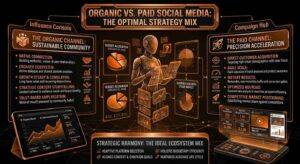
Peptide brands are not just thinking about budget when it comes to organic vs paid social media marketing. Social media marketing is not as simple as it can be in other businesses due to several restrictions placed on advertising, policies of the platforms, and the requirement of trust by those using social media.
While paid campaigns can help peptide brands get seen fast, organic content is typically important for educating people, establishing trust, and fostering long-term connections.
This blog will guide you on the right strategy to find a balance between social media content that is well received and grows trust and content that is paid, which boosts growth if available.
Why Organic vs Paid Social Media Is Different for Peptide Brands
There are many businesses that can grow with just an increase in their advertising budget. The same isn’t possible for peptide brands often. Some platforms, like the ones offered by Meta and TikTok, could limit advertising of peptides due to health claims, targeting guidelines, and product policies.
This means the decision is not only “How much should we spend?”
It is also heavily depends on:
“What marketing channels can reliably reach our audience?”
Peptide companies typically turn to organic content as their primary method of education and trust building.
What Is Organic Social Media Marketing?
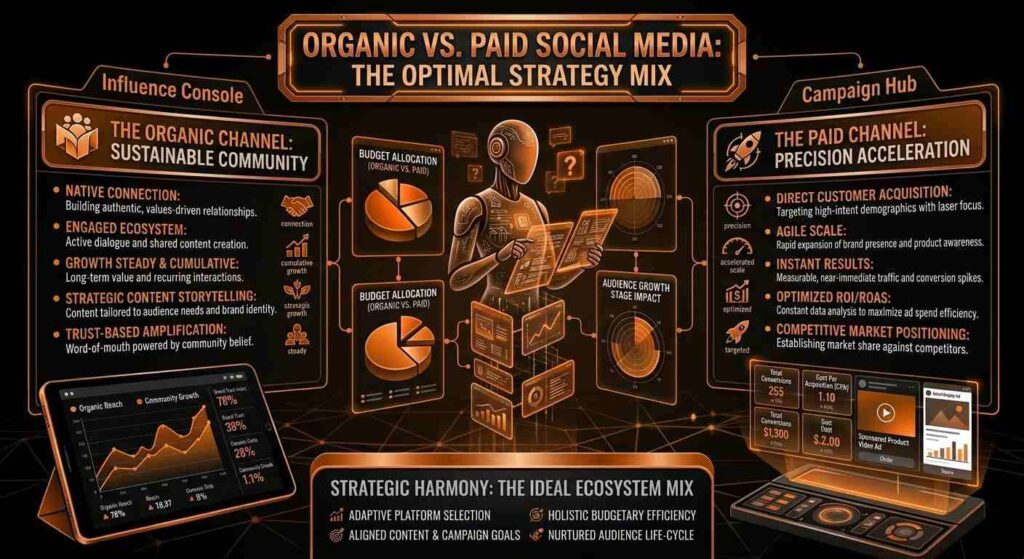
Organic social media marketing refers to any activity that is not done for financial or monetary compensation for the brand and instead is performed naturally. Organic social media marketing involves promoting content on social media channels without paying or receiving anything in return for the brand.
Examples include:
- Educational posts
- Videos and reels
- Research-based content
- Community discussions
- Customer questions and answers
For peptide brands, organic content helps explain complex topics and allows potential customers to understand the brand before making a decision.
Benefits and Challenges of Organic Social Media
| Benefits | Challenges |
| Builds trust without ad approval | Requires consistent content |
| Supports customer education | Growth is usually slower. |
| Creates long-term visibility | Organic reach can fluctuate. |
| Improves social media engagement | Depends on the social media algorithm |
Organic reach takes time, but valuable content can continue attracting attention long after it is published.
For more on how this affects customer perception, see How Social Media Impacts Brand Trust and Discoverability.
What Is Paid Social Media Marketing?
Paid social media marketing is when you pay a platform to post your content in ads, sponsored posts, and retargeting campaigns.
Paid social can assist brands:
- Reach new audiences faster
- Test marketing messages
- Retarget website visitors
- Increase visibility of successful content
However, peptide brands need to consider approval risks before depending heavily on paid advertising.
Benefits and Challenges of Paid Social Media
| Benefits | Challenges |
| Faster paid reach | Higher compliance risk |
| Precise audience targeting | Requires ongoing budget |
| Easier campaign testing | Ads may be rejected. |
| Useful for retargeting | Results stop when spending stops |
Paid social works best when it supports an existing brand presence instead of replacing organic growth.
Social Media Advertising vs Organic Reach: What’s the Difference?
| Factor | Organic Reach | Paid Reach |
| Cost | Requires time and content investment | Requires advertising spend |
| Speed | Slower growth | Faster visibility |
| Control | Limited by algorithm changes | Controlled by budget and approval |
| Best Use | Education and trust building | Retargeting and promotion |
| Long-Term Value | Compounds over time | Stops when campaigns stop |
For peptide brands, organic reach usually provides the stronger foundation, while paid reach helps amplify proven strategies.
How Should Peptide Brands Plan Their Social Media Budget?
Traditional social media budget planning does not always work for peptide companies because paid opportunities may be limited.
A practical allocation may look like:
| Area | Budget Allocation |
| Organic content creation | 50–60% |
| Paid campaigns and retargeting | 15–25% |
| Email marketing support | 15–20% |
| Testing new opportunities | 5–10% |
The exact split depends on platform policies, audience behavior, and campaign performance.
When Should Peptide Brands Use Organic vs Paid Social Media?
| Goal | Best Option |
| Build brand trust | Organic |
| Educate customers | Organic |
| Improve social media engagement | Organic |
| Retarget interested visitors | Paid |
| Test new audiences | Paid |
| Scale proven campaigns | Paid |
Building a Peptide Social Media Growth Strategy
Having a good social media growth strategy involves using both channels and not viewing them as competitors.
A typical customer journey is:
Organic content → Builds awareness
↓
Email marketing → Nurtures leads
↓
Paid campaigns → Reinforce interest
Organic social media creates the initial connection, while paid campaigns help reach people who already know the brand.
A complete social media marketing strategy should focus on:
- Consistent educational content
- Audience targeting
- Measuring engagement
- Testing different formats
- Adjusting based on performance
Can Organic Social Media Still Work for Peptide Brands?
Yes. Organic content remains one of the most reliable ways for peptide brands to build visibility without depending completely on advertising platforms.
It helps brands:
- Educate potential customers
- Answer questions publicly
- Build credibility
- Create communities
Paid advertising can accelerate growth, but organic social media remains essential for long-term brand development.
Best Social Media Platforms for Peptide Brands
The platform decision is as critical as the selection of organic vs paid social media. But Peptide brands must find platforms in which they can educate their audience and tell them the truth without the risk of breaking the rules.
- LinkedIn.
- YouTube
- TikTok
The ideal strategy is to not rely on one single platform. A multi-channel social media approach can help peptide brands develop visibility, target various groups, and minimize the dependence on paid ads.For Detailed insight, read our blog Which Social Media Platforms Matter Most for Your Business in 2026?
4 Common Social Media Marketing Mistakes Peptide Brands Should Avoid
- Publishing Inconsistent Content
- Ignoring Community Engagement
- Making Unsupported Claims
- Depending Only on Paid Advertising
Final Thoughts
The right balance of organic and paid social media is going to be a function of what you are looking to achieve, who you are trying to reach, and platform limitations. Organic social media posts will likely be more impactful on the minds of peptide brands, as trust and education can influence an eventual purchase.
Paid social media is most effective when used in conjunction with retargeting and promotions of compliant campaigns. As a peptide brand, you can build a successful social media strategy at Peptide Marketing, comprising organic content, compliant marketing, lead generation, and audience engagement.
Our strategy works both ways to help businesses overcome challenges on platforms and gain visibility and enhance customer relationships.
Explore Our Social Media Marketing Strategy
FAQs
How do organic and paid social media work together?
Organic is built over time and through building trust and audience, while paid ads (where permitted) will reach those who already know the brand. Organic is doing most of the work for peptide companies, and paid is used to bolster it.
Is organic social media better than paid ads?
Organic is generally a better long-term strategy for peptide brands, primarily because of the restrictions on paid ads on platforms that organic doesn’t have.
Why is organic reach declining?
Content that can be created to keep users on the platform longer is increasingly preferred by algorithms, and paid content is more likely to be favored over posts that are not paid. That’s more of a challenge for peptide brands because they cannot easily compensate for it with paid advertising.
How much should I spend on social media advertising?
A general rule is anywhere from 5% to 15% of revenue, but for peptide brands, more of the revenue might be dedicated to organic spend and less to ads.
Can organic social media still work in 2026?
Yes. It’s still one of the few things that peptide brands have total control over, and it has the benefit of not needing to be approved like paid ads.